Managing multiple teams and projects, each with its own set of needs and priorities, is almost a given for product managers: one moment you’re coordinating the release of a new feature with one team, and the next, you’re aligning on a critical bug fix with the other. The reality is that handling these complexities requires more than just good intentions; it demands strategic planning, clear communication, and a good understanding of the obstacles that can arise.
The Challenges of Managing Multiple Teams and Projects
Managing several teams and projects simultaneously isn’t simply about doing more work. It’s about navigating a web of dependencies and ensuring that all moving parts align towards a common goal:
- Competing Stakeholder Interests: Different stakeholders often have conflicting priorities. For example, marketing or sales may push for new features to stay competitive, while the support team might focus on fixing or enhancing existing features to improve customer satisfaction. Balancing these interests requires careful negotiation and clear communication to avoid conflicts and ensure all voices are heard.
- Dependency Management: Projects often depend on each other, meaning delays in one can affect others. For instance, if the design team is late in delivering assets, the development team might be stuck waiting.
- Cultural Differences: Teams from different regions or backgrounds may have different working styles or communication preferences. For example, a direct approach may be common in one culture but seen as rude in another. Understanding and respecting these differences while finding common ground is essential for effective collaboration.
- Resource Allocation: Effectively distributing resources across multiple projects is a common struggle. It’s not always easy to reassign people to another team, as this can break up established teams, and they might not be familiar with the new project’s topic or technology.
- Knowledge Silos: When teams work separately, they can develop knowledge silos, where critical information is only known to a few people. This can cause issues when that knowledge is needed by another team or when someone leaves the company. Encouraging knowledge sharing and documentation is key to overcoming this challenge.
- Team Morale and Motivation: Different projects can create different levels of stress and job satisfaction among teams. If one team is consistently handling tougher tasks or mainly fixing bugs, it might affect their morale.
- Maintaining Consistent Quality: Ensuring that all teams deliver work that meets the same high standards is tough. Different interpretations of quality can lead to inconsistencies in the final products.
- Risk Management: With multiple projects, the risk of something going wrong increases. Whether a bug or a missed deadline, the impact can cascade across projects. Regular risk assessments are vital to mitigate these risks.
Strategies for Overcoming the Challenges
So, how can you effectively manage multiple teams and projects without getting lost in the chaos? Here are some strategies that have worked for me and are backed by experts in the field:
- Establish Clear Priorities: It’s crucial to align your teams around clear priorities. Define your project goals and let them guide your decision-making process. You can’t emphasize enough the value of communicating these decisions to your team: explain why some priorities might change and provide additional context about market conditions and customer demands. This transparency helps your teams understand the bigger picture and stay motivated. Also, being honest builds trust and respect.
- Use Agile Methodologies: Agile frameworks are highly effective in managing multiple projects. Continuous discovery processes (constantly gathering feedback from users and analyzing market trends) that allow for rapid adjustments are essential when handling several projects that might require quick changes. It’s very useful to share these discoveries between teams to ensure all projects are aligned with current customer needs and market changes. A centralized repository for user feedback and insights can help everyone stay on the same page.
- Use Technology to Your Advantage: Tools like Jira, Trello, or Aha! are essential for tracking progress and managing resources across teams. These platforms provide visibility into project statuses and dependencies, helping you to foresee and prevent potential issues.
- Empower Team Leads: Delegating responsibility to skilled team leads is key. This allows you to focus on the overall strategy and coordination. Empower your teams to make decisions independently, ensuring you aren’t the bottleneck in the process.
- Encourage Ownership: Beyond just empowering team leads, encourage every team member to take ownership of their part of the project. This spreads responsibility and accountability, making the team more resilient when facing challenges.
- Implement Regular Check-ins: Consistent check-ins with team leads and stakeholders help keep projects on track. These can be tailored to your teams’ needs: daily stand-ups, weekly reviews, or sprint retrospectives. Frequent communication and feedback loops are essential in managing complex environments.
- Focus on Cross-Functional Collaboration: Encourage open communication and collaboration between teams. Cross-functional meetings and shared documentation can help bridge gaps and ensure everyone is working towards the same goals.
- Develop Strong Documentation Habits: Ensuring teams document their work, decisions, and processes can help streamline cross-team collaboration and prevent confusion. It also makes it easier to onboard new team members and keep up with fast-paced changes.
- Monitor and Adjust: Keep an eye on team morale, workload, and project progress. Be ready to adjust strategies based on real-time feedback. It’s important to recognize when the workload is too much and to ask for help when necessary. Taking care of yourself is just as crucial as managing your teams.
- Foster Psychological Safety: Create an environment where teams feel comfortable sharing concerns, challenges, or even failures. This transparency leads to faster problem-solving and a healthier team dynamics.
Product Manager Dashboard: A Prototype for Working on Multiple Teams and Projects
As I was writing this article, I received an email from Anthropic where they announced that the creation of components with Claude was now available across all versions of their platform. This sparked an idea: Why not experiment with creating a prototype that could help product managers manage multiple teams and tasks more efficiently?
I had a lot of fun iterating on this idea: a Product Manager App to oversee and manage various aspects of a PM’s multiple projects. By using the app, the product manager can keep track of the progress made by the teams, check the completion rate of each feature and delegate PM tasks to other team members. In this example, all teams are working on different features of a health tracking app:
1. Overview Tab: Offers a quick glance at resource allocation and feature progress.
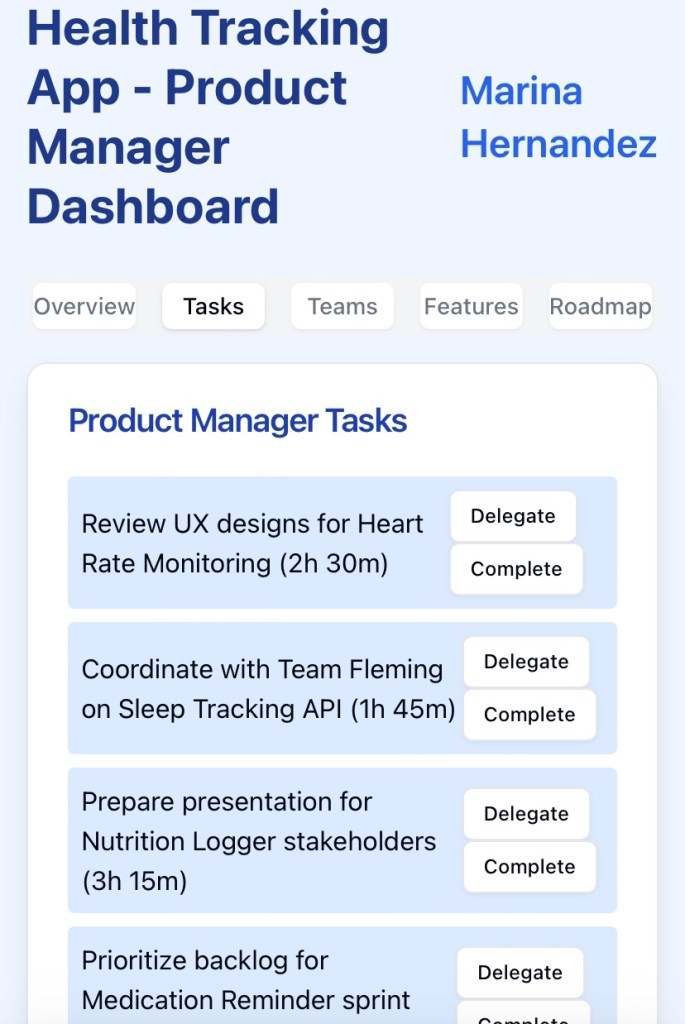
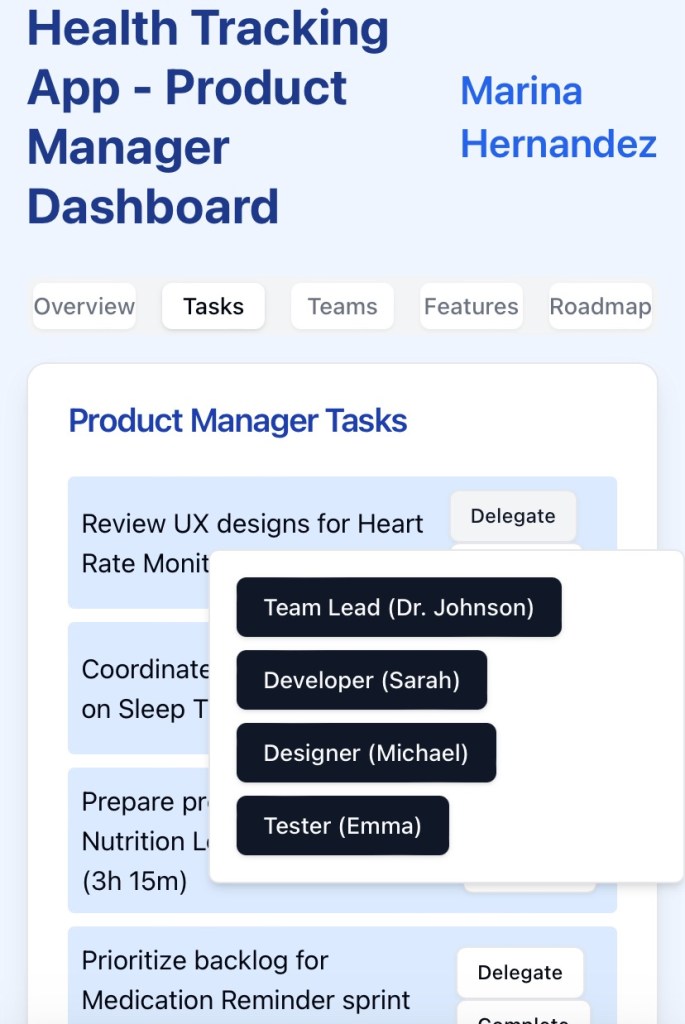
2. Tasks Tab: Displays a list of product manager tasks with time estimates and the ability to delegate to team leads.
3. Teams Tab: Shows the composition of different teams using interactive charts.


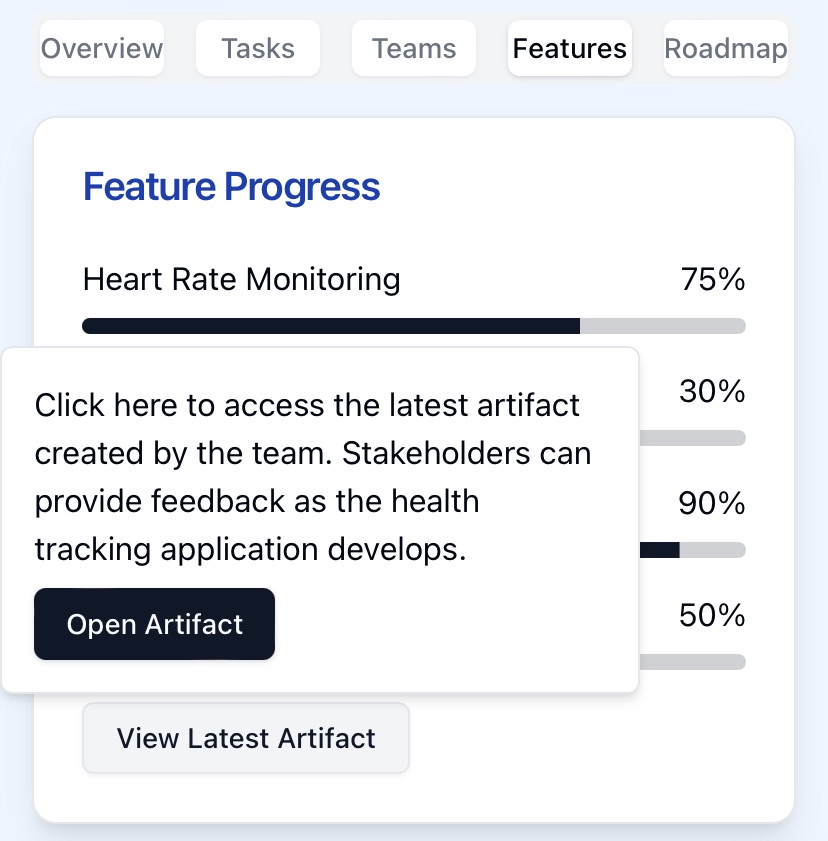
4. Features Tab: Presents the progress of various features and provides access to the latest artifacts for stakeholder feedback.

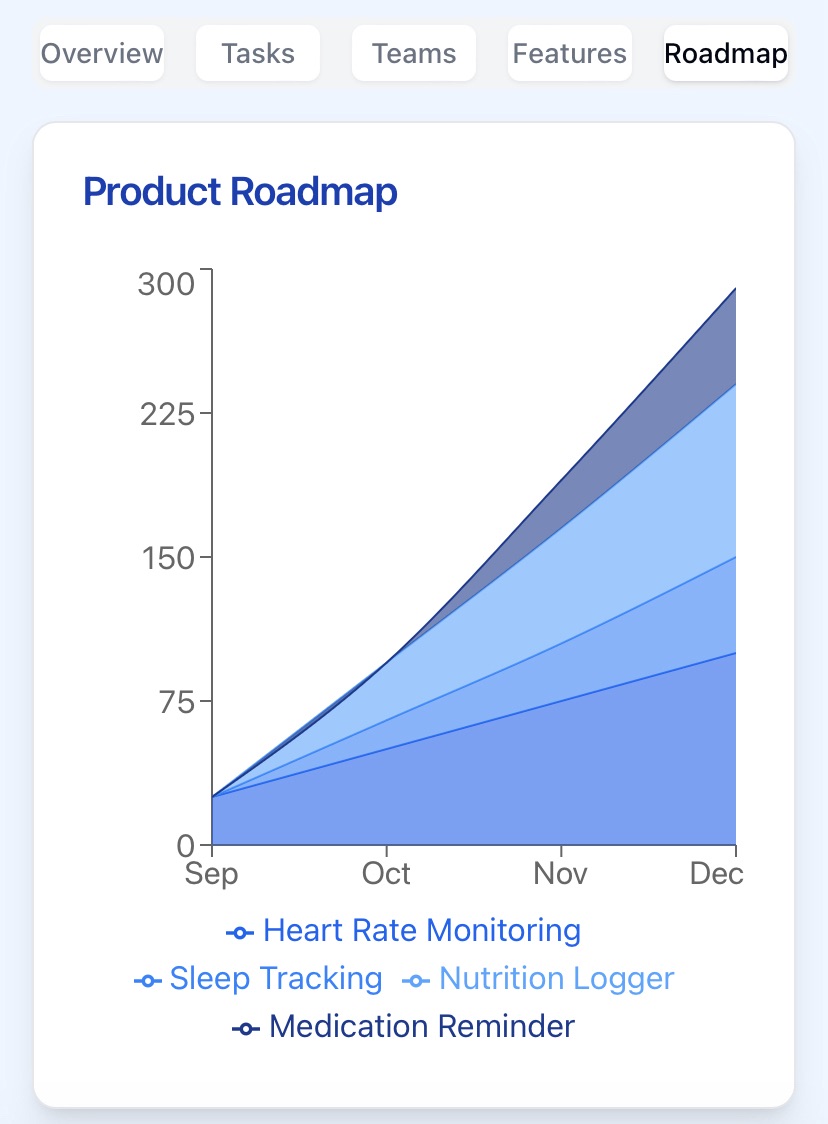
5. Roadmap Tab: Visualizes the product roadmap over time using an area chart.

Key Features
– Modern, blue-themed UI for a tech-oriented look.
– Interactive charts for data visualization.
– Task delegation functionality.
– Time tracking in hours and minutes.
– Popups for additional information and stakeholder artifact access.
– Responsive design for various screen sizes.
Final Thoughts
Managing multiple teams and projects is no small feat, but with clear priorities, agile practices, and strong communication, it can be done successfully. The key is to stay flexible, keep your teams aligned, and empower them to do their best work. As software development continues to demand more from us, these strategies will help ensure that your projects don’t just get done. They get done well, on time, and with a team ready to take on whatever comes next.
Regarding Claude, in just a few minutes, and by simply sharing some requirements and acceptance criteria, I created a prototype with React for a Product Manager App. It was a fun project that really tapped into my creative side, and it showed how, by using these tools, you can quickly turn ideas into working solutions with just a few details.





 Marina Hernández
Leave a comment